There’s a simple idea that turns up whenever the country feels a bit skint, a bit fed up, or both: buy British. Spend your money on things made here, and the whole place does a bit better. Wages stay in the UK. Local businesses survive. Skills don’t vanish. Everybody wins.
Nice thought. In real life it can be a right pain in the arse.
Not because the idea’s wrong. It’s because “British-made” is one of those slippery little phrases that can mean almost anything, depending on how badly someone wants to sell you a toaster.
What buying UK-made actually does (when it’s real)
If you buy something that’s genuinely manufactured in the UK, you’re not just paying for an object. You’re paying for a whole chain of work that happens here: factory staff, engineers, designers, cleaners, drivers, warehouse people, admin bods trying to stop everything collapsing. That’s wages spent in local shops, rent paid to local landlords, taxes going into the big leaky bucket that funds everything from potholes to the NHS.
And before anyone says “yeah but businesses dodge taxes”, yes, some do. That’s not an argument against supporting the ones that actually employ people here. It’s an argument for being angry in multiple directions at once. Britain: the national sport.
There’s also the boring but important bit: if we make more things here, we keep the ability to make them. Skills and equipment don’t hang around out of nostalgia. Once a factory’s gone, it’s not coming back because you liked a tweet about British industry.
It can be about resilience, not just patriotism
Buying UK-made isn’t automatically flag-waving. It can make supply chains less fragile.
If a product is made here, you’re often less exposed to global shipping chaos, sudden shortages, or price jumps when energy costs go weird. That doesn’t mean British-made is magically immune to world events. We still import loads of components, raw materials, and fuel. But shorter chains can mean fewer points of failure.
It can also mean repairs are less of a circus. If the manufacturer’s in the same country, there’s a chance they stock parts, answer emails, and don’t act like you’re being unreasonable for wanting your expensive thing to last longer than a houseplant.
But the labels are often a mess
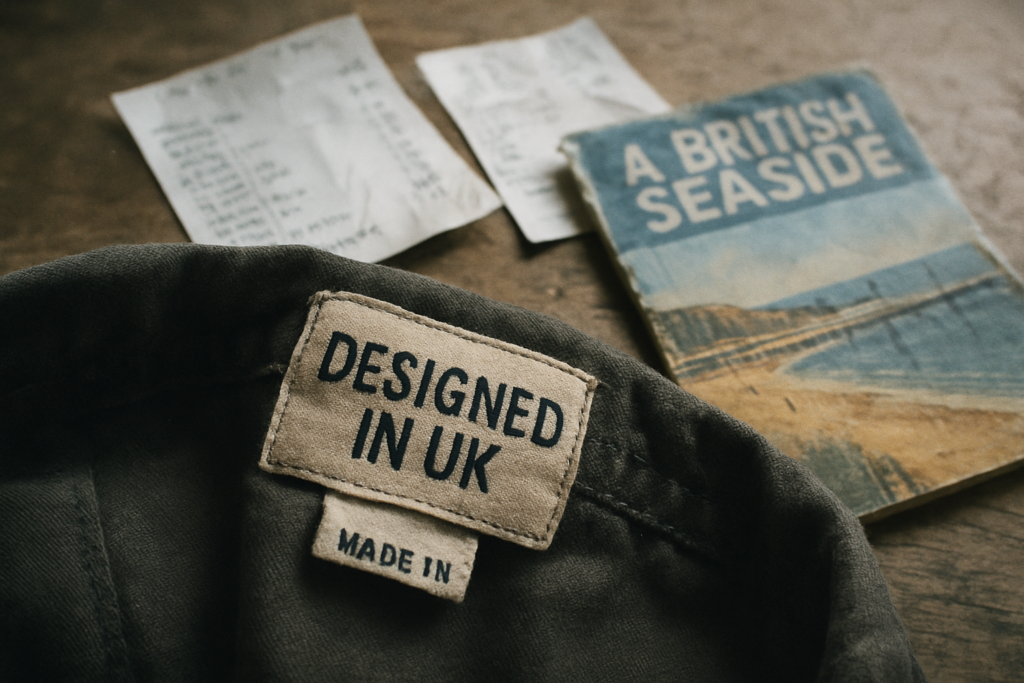
Most people aren’t trying to be detectives. You just want to buy a bloody kettle without financing something you’d rather not. But “Made in the UK”, “Made in Britain”, “British brand”, “Designed in Britain”, “British heritage”, “assembled in the UK”… they’re not the same thing.
Sometimes the UK bit is real and meaningful. Sometimes it’s a final-stage assembly job. Sometimes it’s a British-sounding brand name slapped on something made elsewhere, and the marketing budget does all the heavy lifting.
To be fair, it’s not always malicious. Modern manufacturing really is global. A product can be designed in one place, made from materials from three others, assembled somewhere else, packaged in another, then shipped around like it’s on a gap year.
But if you’re trying to support UK manufacturing, that complexity matters.
Common ways “British” gets stretched
- Designed in the UK (manufactured elsewhere). Design work is real work, but it’s not UK manufacturing.
- Assembled in the UK using imported components. Again, real jobs, but it’s not quite the same as making the thing from scratch.
- British-owned brand with overseas manufacturing. Your money still mostly follows the manufacturing route.
- Packaging and finishing done here. Lovely. Not what most people mean by “made here”, though.
I’m not saying any of this is automatically bad. I’m saying you shouldn’t have to squint at a label like it’s a legal document just to make a halfway informed choice.
How to buy UK-made without losing your mind
You’re not going to fix globalisation with your debit card. But you can do a few practical things that shove your spending in the direction you want.
1) Look for plain language, not vibes
“Made in the UK” is clearer than “British brand” or “crafted with British spirit” or whatever nonsense the copywriter knocked out at 4:55pm on a Friday.
If it says “Made in the UK” on the product itself or the official product page, that’s at least a specific claim. (Worth remembering: I can’t verify individual companies’ claims here. If you’re about to spend serious money, double-check with the manufacturer.)
2) Check the manufacturer’s wording, not just the shop listing
Retail listings often recycle generic descriptions. The manufacturer’s site usually has the least-worst version of the truth, because they’re the ones who’d get stick for it.
3) Ask one blunt question
If you email or message and ask “Is this manufactured in the UK? If not, where is it made?” you’ll learn a lot from the response. A decent company will answer. A dodgy one will tap dance.
4) Accept trade-offs like an adult
Sometimes UK-made costs more. Sometimes there’s less choice. Sometimes it’s just not available.
And sometimes the most sensible thing you can do is buy second-hand. It’s not UK manufacturing, but it is refusing to churn more new stuff into the world. If you care about waste, that counts.
Materials: this is where it gets awkward
Even when something is manufactured here, the raw materials might not be. That’s not necessarily deceit. The UK doesn’t grow everything, mine everything, or refine everything. We’re an island, not a self-contained simulation.
But it does mean “UK-made” doesn’t always equal “UK-sourced”. If your goal is to support UK jobs, UK-made still matters. If your goal is to keep every penny inside UK borders, good luck, and also please tell me how you plan to manufacture electronics without an international supply chain.
The honest version is: you can push your spending towards UK labour and UK businesses, but you can’t always push it towards 100% UK materials. Anyone claiming otherwise needs checking.
Holidays in the UK: same argument, just with rain
People talk about “holidaying at home” like it’s a moral duty, which is a great way to make everyone hate it. But spending holiday money in the UK has similar benefits to buying UK-made goods.
If you book a cottage in Wales, a scruffy hotel in Blackpool, a B&B in the Highlands, or a campsite in Cornwall, a lot of that money stays in the local economy. Not all of it. Some goes to big booking platforms and owners who live elsewhere. But a decent chunk goes to local staff, local tradespeople, and local places you’ll eat and drink at because you’re not going to cook every night. (If you do cook every night on holiday, I respect your discipline and fear your energy.)
UK breaks can also spread money beyond the usual London-or-Edinburgh gravitational pull, which matters because plenty of places are basically held together by seasonal work and sheer stubbornness.
Why it can be hard, though
Let’s not pretend UK holidays are always the cheap, easy option.
- Cost: Depending on dates and location, UK accommodation can be eye-watering. That’s not a moral failing on your part. It’s a real barrier.
- Availability: School holidays turn booking into a competitive sport.
- Weather: You’re gambling. Sometimes you win. Sometimes you spend three days in a damp arcade eating chips like it’s a coping mechanism. Because it is.
Still, there are ways to make it less painful.
Making UK holidays work without hating yourself
- Go slightly off-peak if you can. Even a couple of weeks either side can change prices.
- Pick one main thing (a coast, a city, a national park) and stop trying to “do it all”. Britain is small until you’re stuck behind a tractor for 40 minutes.
- Spend with locals where possible: independent cafés, local attractions, local guides. Not because chains are evil, but because you’re literally there to put money into the place.
- Don’t fetishise authenticity. A tourist town is allowed to be touristy. You’re the tourist.
The annoying truth: the slogan is easier than the reality
“Buy British” is a neat little phrase. Real life isn’t neat. It’s full of half-truths on packaging, messy supply chains, and the fact that most people aren’t made of money.
But that doesn’t mean it’s pointless.
If you care about jobs, skills, and businesses lasting longer than a news cycle, paying a bit more attention to where things are actually made can help. Same with where you holiday. You’re not fixing the country on your own. You’re just making one decision slightly less mindless. That’s more than most.
And if a company tries to sell you “British heritage” as a substitute for “actually made here”, you’re allowed to roll your eyes so hard you see your own brain.