WATER COMPANIES WANT TO TRY SURGE PRICING BECAUSE APPARENTLY WATER IS NOW AN UBER
There was a time when you turned on the tap, water came out and you paid your water bill.
Simple.
Apparently we’ve moved on.
Water companies in England and Wales are now looking at ways of charging people more depending on how scarce water is, with Ofwat considering proposals that could allow water scarcity and efficiency to play a bigger role in the way bills are calculated.
In other words:
It’s dry outside.
You use some water.
They might charge you more for it.
Welcome to Surge Pricing: The Water Edition
Because if Uber can charge you more because it’s raining and everyone wants a taxi, why shouldn’t your water company charge you more because it’s sunny and everyone wants a shower?
DON’T PANIC, IT’S NOT QUITE SURGE PRICING. PROBABLY.
The proposals being considered by Ofwat are not the same thing as saying that every household in Britain will suddenly receive a gigantic bill because somebody dared to fill a paddling pool.
The idea is that water companies could take water scarcity into account when designing tariffs, encouraging people to use less when supplies are under pressure.
And several companies are already experimenting with different charging systems.
Which sounds terribly sensible.
Until you remember that we’re talking about an industry which has spent years being told to stop losing enormous quantities of water through leaking pipes.
THREE-QUARTERS OF ENGLAND IS IN DROUGHT
The timing is particularly interesting.
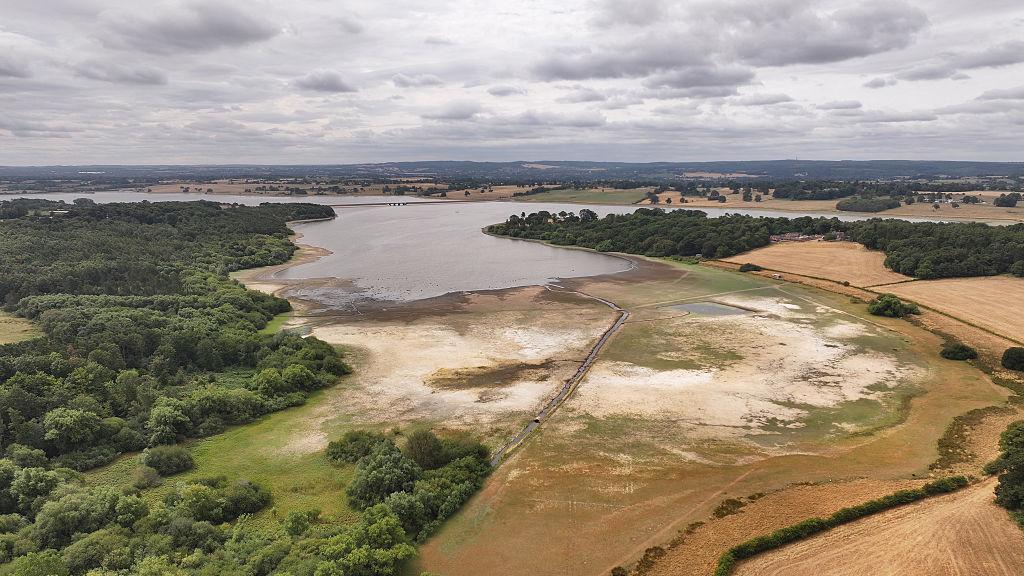
The summer of 2026 has been exceptionally hot and dry, with almost three-quarters of England and all of Wales officially declared to be in drought.
So yes, water is becoming a bigger concern.
But campaigners have pointed out something rather awkward.
Water companies are already losing vast quantities of water through leaks.
And we’re not talking about the occasional drip from a garden tap.
The amount of water lost through leaks has been described by campaigners as far greater than what could be saved by a nationwide hosepipe ban.
So the average customer could reasonably ask:
“Hang on. If you want me to use less water, how about you stop yours escaping first?”
A surprisingly reasonable question.
THE SOUTH WEST HAS ALREADY BEEN EXPERIMENTING
South West Water is trialling something called a rising block tariff.
The basic idea is fairly straightforward.
Use less water, and you pay a lower rate.
Use more and the price increases.
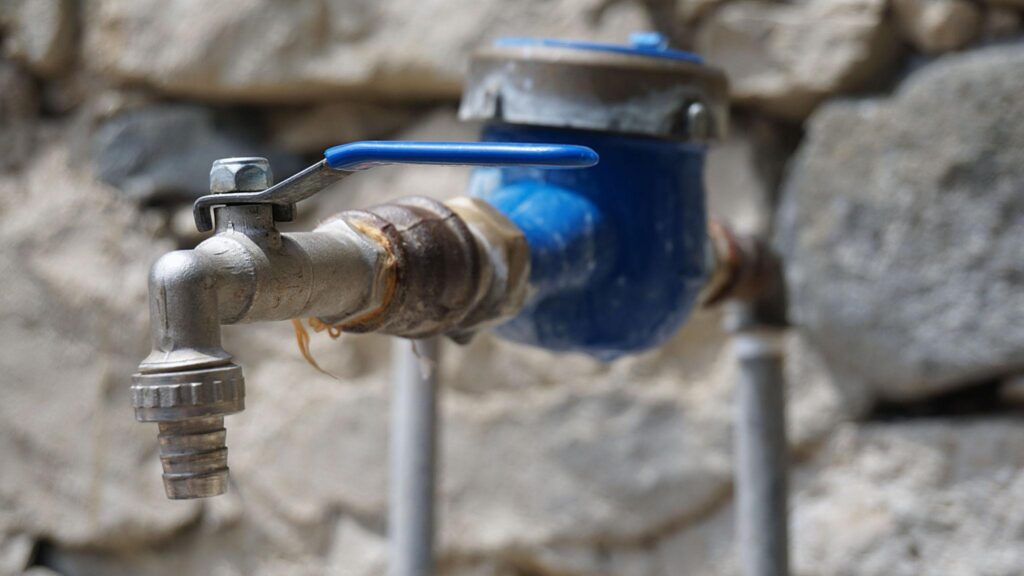
About 500 households are involved in the trial, and South West Water says its assessment suggests around 90% of participating customers would receive lower bills.
Which sounds considerably better than:
CONGRATULATIONS! YOU USED WATER. HERE’S YOUR £4,000 BILL.
The company supplies roughly 1.8 million customers across the south-west, including Devon and Cornwall.
And that’s not the only experiment taking place.
SUMMER WATER COULD COST MORE THAN WINTER WATER
Anglian Water and South West Water are also experimenting with charging customers differently depending on when they use water.
Summer use could cost more than winter use.
Which, when you think about it, is rather clever.
People naturally use more water during hot weather.
Gardens need watering.
Children suddenly discover the paddling pool.
Dogs become convinced that the hosepipe is the greatest invention in human history.
Everyone wants approximately seventeen showers a day.
Unfortunately, that’s also exactly when water supplies can be under the greatest pressure.
BUT THE GOVERNMENT SAYS THERE IS NO NATIONAL SURGE-PRICING PLAN
Before everyone starts filling the bath for the next ten years, there’s an important distinction.
The government says there are currently no plans for nationwide surge pricing for water bills.
Instead, water companies are being allowed to experiment with different charging structures, with the stated aim of making bills fairer while encouraging people to use water more efficiently.
The government also says money earmarked for infrastructure has been ringfenced so it can only be spent on fixing problems.
Which brings us neatly back to…
THE BLOODY LEAKS
Because this is where the whole argument becomes rather uncomfortable.
People are being told to conserve water.
Meanwhile, enormous quantities of water are disappearing through ageing infrastructure.
It’s a little like telling somebody they’re wasting electricity while leaving the front door open in January with the heating turned up to maximum.
You can certainly lecture the customer.
But perhaps fixing the hole would be worth considering too.
WATER COMPANIES: “WE COULD REWARD YOU FOR SAVING WATER”
Water UK, the industry’s trade association, says companies are already working to reduce leaks and believes customers could potentially be encouraged to save water through their bills.
Suggestions include removing standing charges or expanding discounts for people who reduce their consumption.
And that’s an interesting idea.
Because there is a massive difference between:
“Use less water or we’ll charge you more.”
and
“Use less water and we’ll give you a discount.”
One sounds like punishment.
The other sounds like an incentive.
Funny how that works.
CONSUMER GROUPS SAY DON’T HAMMER PEOPLE WHO ARE ALREADY STRUGGLING
Andy White of the Consumer Council for Water says companies are right to explore new tariff structures, but any system has to protect people who are already struggling with increasing water bills.
That’s probably the bit everyone should pay attention to.
Because a family using more water isn’t necessarily wasting it.
They may simply have more people in the house.
They may have children.
They may have someone who needs additional washing.
They may have no garden and still somehow use more water than their neighbours.
Or they may simply be unable to afford fancy smart-home technology that tells them exactly how many litres they used to flush the toilet at 7:43am.
Smart meters could help customers understand their consumption, but better information is not the same thing as making essential water progressively more expensive.
AND THEN THERE’S THE SMALL MATTER OF PUBLIC TRUST
Here’s the elephant in the room.
Actually, given the state of some British waterways, perhaps elephant in the sewage would be more appropriate.
Public anger towards the water industry has increased dramatically in recent years.
Bills have gone up.
Sewage discharges have continued to make headlines.
Water companies have faced criticism over executive pay.
And shareholders have continued receiving dividends.
So when the industry starts talking about charging people more when water becomes scarce, it’s probably not surprising that some customers immediately reach for the nearest pitchfork.
People aren’t necessarily against using less water.
They might simply want to know:
“Why am I being asked to make sacrifices when the companies responsible for supplying the bloody stuff haven’t exactly covered themselves in glory?”
And that is probably the real problem Ofwat and the water companies have to solve.
Not simply how to make people use less water.
How to make people trust them enough to believe the reason isn’t simply to make more money.
Because once you’ve lost that trust, even a perfectly sensible water-saving scheme starts looking suspicious.
And when the pipes are leaking millions of litres away while customers are being told to take shorter showers…
Well.
You can probably see why people are taking the piss.